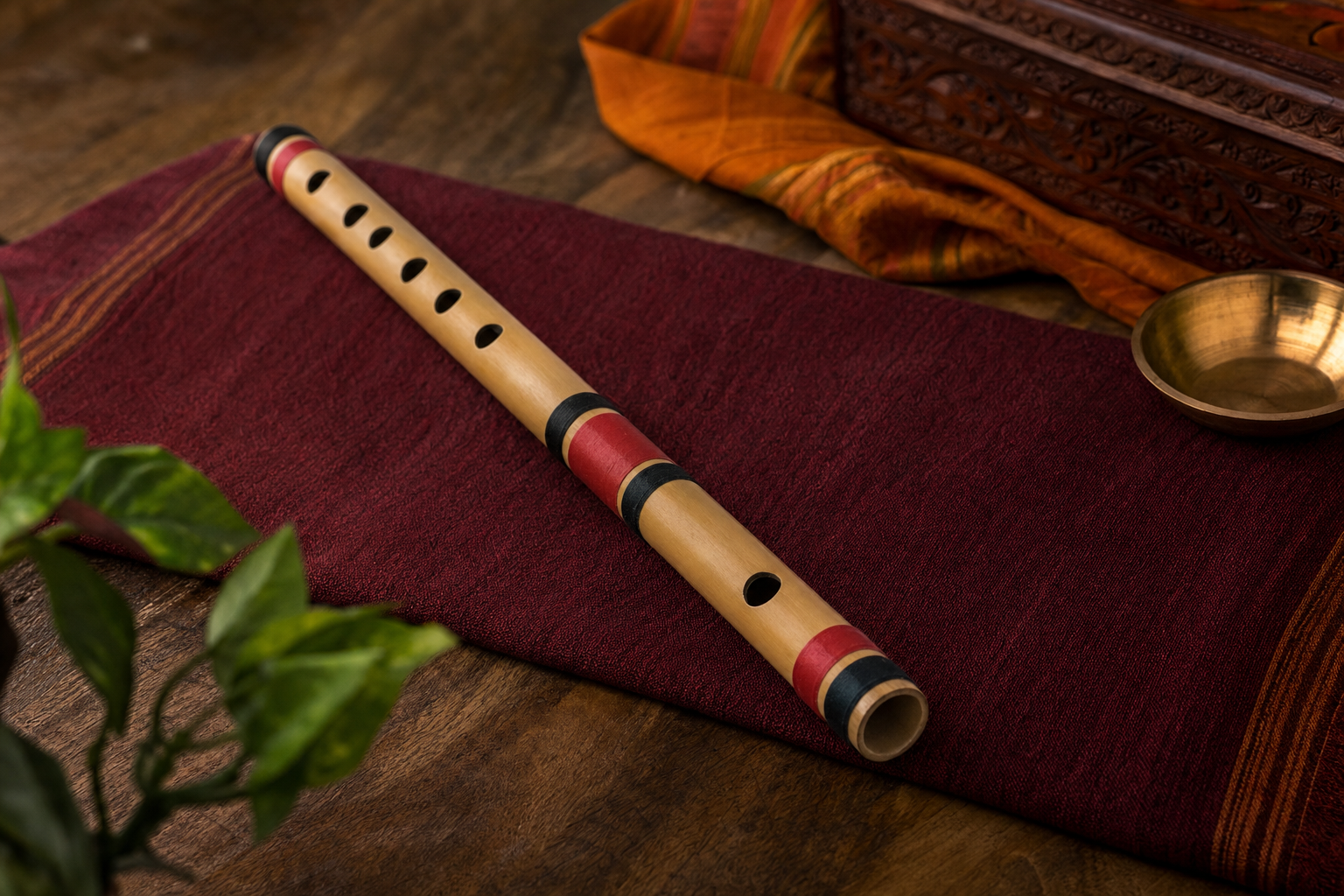
Bansuri (Bamboo Flute)
Also known as Bamboo flute, Indian flute, बाँसुरी
The side-blown bamboo flute of South Asia
A simple bamboo tube with six or seven finger holes, and one of the oldest instruments of the Indian subcontinent. It is played in Hindustani classical music, film music and the folk music of Nepal and India.
- Difficulty
- ModerateDifficulty 3 of 5
- Type
- Wind
- Origin
- Indian subcontinent and Nepal
- First sound
- A few practice sessions
- First song
- A few weeks
History of the Bansuri (Bamboo Flute)
Flutes made of bamboo appear across South Asian art and literature for well over a thousand years, and the bansuri is closely associated with Krishna in Hindu tradition. For centuries it was mainly a folk instrument.
In the 20th century Pannalal Ghosh developed a longer bansuri suited to the slow, detailed exploration of a raga, bringing it onto the classical concert stage. Hariprasad Chaurasia later made it known worldwide. In Nepal, the bansuri remains central to folk songs and devotional music.
How hard is the Bansuri (Bamboo Flute) to learn?
The hardest step is the first one: making a clear tone. Most beginners hear only air at first. Once the lip shape clicks, the basic notes come quickly, and simple songs follow within weeks.
Half-holing for komal (flat) notes, smooth meend (glides) and the upper octave take months to years to refine.
Getting started as a beginner
- Start with a medium-length flute in a comfortable key; very long, low flutes need a big stretch.
- Learn to hold it relaxed, covering holes with the flat pads of your fingers.
- Practise a steady tone on one note before moving on.
Frequently asked questions
The word "Bansuri" itself is as simple and beautiful as the instrument. It is a combination of two words. First, there is "bans," which means bamboo. Second, there is "sur," which means a musical note. When you put them together, you get a "bamboo note."
Read more: What is a Bansuri? A Beginner's Complete Guide to the Bamboo Flute →
A medium-length flute, often in the key of C or G, is a common recommendation because the finger stretch is comfortable.
Read more: How to Choose and Buy Your First Bansuri: A Complete Buying Guide →
Many people start on their own using guided lessons. A teacher helps most with tone and posture, which are hard to judge alone.